




Blog
- Home
- Blog
Lips Hurt: Common Causes and Best Treatment
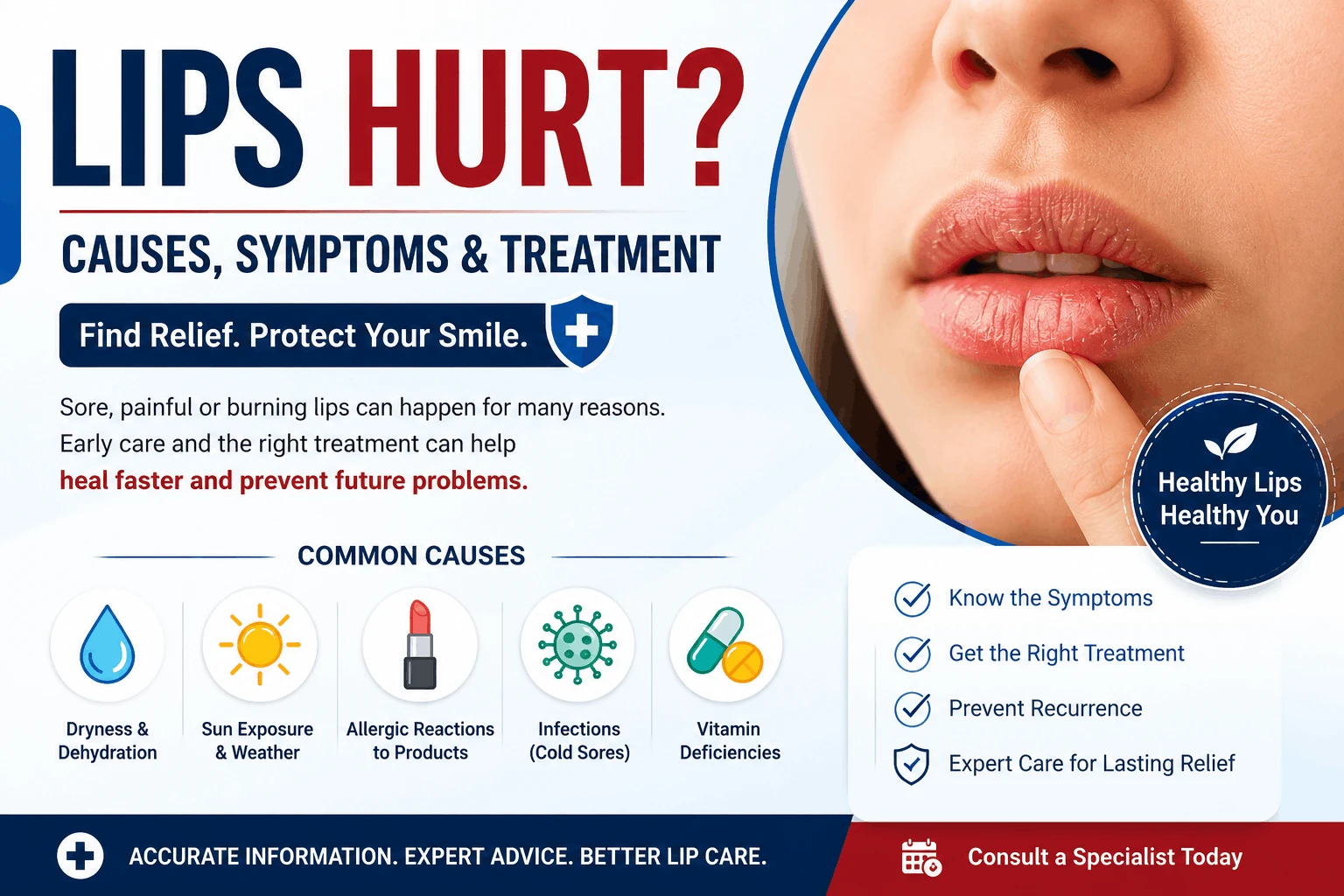
If your lips hurt, the most common causes are dry or chapped lips, allergies, infections, sunburn, or vitamin deficiencies. Most cases improve with proper hydration, lip moisturizers, and avoiding irritants, but severe pain, swelling, blisters, or persistent symptoms should be evaluated by a doctor.
What Does It Mean When Your Lips Hurt?
Painful lips usually indicate irritation, inflammation, infection, or damage to the delicate skin of the lips. The pain may feel like burning, stinging, cracking, tenderness, or soreness. While dry weather and dehydration are common causes, lip pain can also result from allergic reactions, cold sores, nutritional deficiencies, or certain medical conditions.
Most cases are mild and heal within a few days with proper lip care. However, lips that remain painful, swollen, or develop blisters or sores may require medical treatment.
Quick Facts About Sore Lips
| Feature | Details |
|---|---|
| Common Problem | Sore or painful lips |
| Most Common Causes | Dryness, chapped lips, allergies, infections |
| Symptoms | Pain, burning, cracking, swelling, redness |
| Contagious? | Only if caused by infections like cold sores |
| Treatment | Lip moisturizers, hydration, medications if needed |
| Prevention | Hydration, lip protection, avoiding irritants |
Common Causes of Lip Pain
Sore lips can develop for many reasons, ranging from simple dryness to infections or underlying medical conditions. Identifying the cause is important because treatment depends on the underlying problem.
1. Dry or Chapped Lips
The most common cause of painful lips is dryness. Cold weather, excessive sun exposure, dehydration, frequent lip licking, or low humidity can remove the natural moisture from the lips, leading to cracks and soreness.
Common Symptoms
- Dryness
- Tightness
- Cracking
- Peeling skin
- Mild burning or pain
2. Allergic Reactions (Contact Cheilitis)
Some people develop sore lips after using certain products such as:
- Lipsticks
- Lip balms
- Toothpaste
- Mouthwash
- Cosmetic products
- Certain foods or flavorings
Allergic reactions can cause redness, itching, swelling, and burning of the lips.
3. Cold Sores (Oral Herpes)
Cold sores are caused by the Herpes Simplex Virus (HSV-1) and usually begin with tingling or burning before painful fluid-filled blisters appear.
Symptoms include:
- Tingling sensation
- Painful blisters
- Crusting sores
- Burning lips
- Swollen lips
Unlike dry lips, cold sores are contagious until they heal.
4. Angular Cheilitis
Angular cheilitis is inflammation at the corners of the mouth. It may develop due to fungal or bacterial infection, saliva accumulation, poorly fitting dentures, or vitamin deficiencies.
Common Signs
- Painful cracks at the mouth corners
- Redness
- Bleeding
- Difficulty opening the mouth
- Burning sensation
5. Vitamin and Mineral Deficiencies
Deficiencies in certain nutrients can affect the health of the lips.
Common deficiencies include:
- Vitamin B12
- Vitamin B2 (Riboflavin)
- Iron
- Zinc
- Folate
People with nutritional deficiencies may also experience fatigue, mouth ulcers, or a sore tongue.
6. Sunburn (Sun-Damaged Lips)
The lips have very thin skin and are highly sensitive to ultraviolet (UV) rays. Spending long hours in the sun without SPF lip protection can lead to sunburned lips.
Symptoms may include:
- Pain
- Redness
- Swelling
- Peeling
- Blistering in severe cases
7. Dehydration
Not drinking enough water reduces moisture in the lips, making them dry, cracked, and painful. Dehydration is more common during hot weather, fever, vomiting, or after intense physical activity.
Symptoms of Sore Lips
Symptoms vary depending on the cause. Some people experience only mild discomfort, while others may develop swelling or infection.
Common symptoms include:
- Pain or tenderness
- Burning or stinging sensation
- Dryness
- Cracked lips
- Peeling skin
- Swelling
- Redness
- Bleeding
- Blisters
- Itching
Sore Lips vs Chapped Lips vs Cold Sores
| Feature | Sore Lips | Chapped Lips | Cold Sores |
|---|---|---|---|
| Cause | Many possible causes | Dryness and weather | HSV-1 infection |
| Pain | Yes | Mild to moderate | Usually painful |
| Blisters | Sometimes | No | Yes |
| Cracking | Sometimes | Common | Rare |
| Contagious | Usually No | No | Yes |
| Treatment | Depends on cause | Moisturizers | Antiviral medicines |
Who Is at Higher Risk?
You may be more likely to develop painful lips if you:
- Frequently lick your lips
- Spend long hours in the sun
- Live in cold or dry climates
- Have allergies or eczema
- Smoke or use tobacco products
- Have vitamin deficiencies
- Wear poorly fitting dentures
- Have a weakened immune system
When Should You See a Doctor?
Although most sore lips heal within a few days, seek medical attention if you experience:
- Severe swelling of the lips or face
- Painful blisters that spread
- Bleeding that does not stop
- Persistent sores lasting more than two weeks
- Fever with lip sores
- Difficulty eating, drinking, or speaking
- Recurrent painful lip infections
Early diagnosis helps identify infections, allergies, nutritional deficiencies, or other underlying conditions before they become more serious.
Diagnosis of Sore Lips
Doctors diagnose sore lips by identifying the underlying cause. A physical examination is usually enough for mild cases, but persistent or severe symptoms may require additional tests.
Your doctor may recommend:
| Test | Purpose |
|---|---|
| Physical examination | Check for cracks, blisters, swelling, or infection |
| Allergy testing | Identify reactions to cosmetics or foods |
| Blood tests | Detect vitamin or iron deficiencies |
| Swab test | Diagnose bacterial, fungal, or viral infections |
Treatment for Sore Lips
Treatment depends on the cause of the lip pain. Most cases improve with proper lip care, while infections or allergies may require medication.
Common Treatments
- Apply a fragrance-free moisturizing lip balm regularly.
- Drink plenty of water to stay hydrated.
- Avoid licking, biting, or peeling your lips.
- Use SPF lip balm to protect against sun damage.
- Antiviral medicines for cold sores.
- Antibiotic or antifungal creams for infections.
- Antihistamines if allergies are responsible.
- Vitamin or iron supplements if a deficiency is diagnosed.
Home Remedies
Mild sore lips often improve with simple home care.
Tips for Faster Healing
- Apply petroleum jelly or a moisturizing lip balm several times a day.
- Increase your daily water intake.
- Use a humidifier in dry environments.
- Avoid spicy, salty, or acidic foods if they worsen the pain.
- Do not pick at peeling skin or blisters.
- Choose fragrance-free lip care products.
How to Prevent Sore Lips
Prevention focuses on protecting your lips from dryness and irritation.
Prevention Checklist
- Stay well hydrated.
- Use SPF lip balm outdoors.
- Avoid frequent lip licking.
- Eat a balanced diet rich in B vitamins, iron, and zinc.
- Protect your lips in cold or windy weather.
- Replace expired cosmetics and lip products.
- Avoid known allergens.
Common Mistakes to Avoid
- Licking your lips repeatedly
- Peeling dry skin from the lips
- Sharing lip balm during an active cold sore
- Ignoring persistent lip pain or swelling
- Using heavily fragranced or irritating lip products
- Delaying medical care for sores lasting more than two weeks
Myths vs Facts
| Myth | Fact |
|---|---|
| Lip pain is always caused by dryness. | Allergies, infections, vitamin deficiencies, and medical conditions can also cause sore lips. |
| Cold sores and chapped lips are the same. | Cold sores are caused by the herpes simplex virus, while chapped lips result from dryness. |
| Licking your lips keeps them moist. | Frequent lip licking actually makes lips drier and more painful. |
| All sore lips need antibiotics. | Treatment depends on the underlying cause, and many cases do not require antibiotics. |
Frequently Asked Questions
1. Why do my lips hurt suddenly?
Sudden lip pain may result from dryness, an allergic reaction, sunburn, or the early stage of a cold sore.
2. Can vitamin deficiency cause sore lips?
Yes. Deficiencies in vitamin B12, riboflavin, iron, folate, or zinc can contribute to painful, cracked lips.
3. Are sore lips contagious?
Most sore lips are not contagious. However, cold sores caused by the herpes simplex virus can spread through close contact.
4. Which doctor should I consult for painful lips?
A general physician or dermatologist can diagnose and treat most causes of sore lips. An oral medicine specialist or ENT doctor may also be involved when necessary.
5. When should I worry about sore lips?
Seek medical attention if lip pain lasts longer than two weeks, is associated with severe swelling, persistent bleeding, fever, or painful blisters.
Conclusion
Sore lips are a common problem that can result from dryness, allergies, infections, sun exposure, or nutritional deficiencies. Most cases improve with hydration, proper lip care, and avoiding irritants. However, persistent pain, swelling, recurrent sores, or signs of infection should not be ignored.
If your lips remain painful despite home care or interfere with eating, drinking, or speaking, consult a healthcare professional for an accurate diagnosis and appropriate treatment. Early medical care can help prevent complications and provide lasting relief.


Rahul Kumar
12 March 2026Very informative article. Thanks for sharing such useful information.